

Fixing Africa’s failing education systems should be seen as a top economic policy priority
First the bad news. After fifteen years in the global economic growth fast lane, sub-Saharan Africa is reeling from the effects of falling commodity prices, depressed Chinese demand, and deteriorating financial conditions. The IMF has revised growth forecasts down to 3.5% for 2016, from an annual average rate in excess of 5% since 2000.
Now for the good news. Africa’s economic slowdown is a wake-up call and an opportunity to rethink an economic model that is failing. The impressive growth record of the past 15 years has roughly doubled output, but with limited results for poverty reduction, job creation and productivity. Already extreme inequality is rising in many countries.
Manufacturing has stagnated.
The challenge for policy-makers is to set a course for recovery that supports more inclusive growth, while preparing the ground for an economic transformation.
Meeting that challenge in the midst of an economic downturn will not be easy. Having ridden the wave of the commodity super-cycle, Africa has been hit hard by the slump in oil and metal prices. Dependent on oil for 70% of government revenue, Nigeria has been forced to turn to the World Bank and the African Development Bank for an emergency loan to plug an expanding budget deficit. Weak commodity prices are magnifying already unsustainable fiscal deficits in Ghana and Zambia.
Eurobond markets that two years ago looked like a source of ‘cheap money’ are delivering their own verdict. The combination of currency devaluation, shrinking foreign exchange buffers and slower growth has pushed typical yields on African bonds from 3-4% two years ago to 8-9% today.
Real as the immediate costs of adjustment are, they should not deflect attention from the deeper failures. While economic output has doubled over the past fifteen years, poverty incidence has fallen modestly – from 57% to 42% – and the number of poor has risen with population growth.
High levels of income inequality are weakening the conversion of growth into poverty reduction. They are also reinforcing wider disparities in education, health and access to basic services that act as a brake on growth itself, creating a double whammy effect.
Other indicators of progress point in a worrying direction. While commodity exports have boomed, Africa’s share of world trade has stagnated at just 2% – and the share of manufacturing in production and exports has declined. Sub-Saharan Africa remains trapped in low value-added segments of international trade.
To make matters worse, the region’s competitive position has deteriorated relative to emerging markets like Vietnam and Bangladesh. Adjusted for productivity real wages are higher, especially for skilled labour. The costs of transport are prohibitive: exporting a container from sub-Saharan Africa typically costs $2,200 (£1557) compared with $610 for Vietnam. Africa’s energy grid produces less electricity than Argentina, forcing firms to install high-cost, low efficiency diesel generators.
None of the barriers to more inclusive and dynamic economic growth are immovable. But undertaking painful adjustments while waiting for an upturn in global markets will not deliver results. As the African Center for Economic Transformation have argued, there is an urgent need for governments to develop national strategies aimed at fostering the entry of firms into higher value-added areas of labour-intensive production. Three essential pillars have to be put in place.
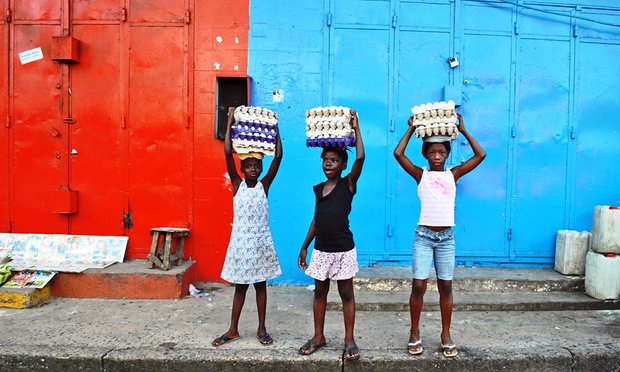
First, education and skills development are the only secure foundation for inclusive growth – and Africa lacks those foundations. Fewer than one-in-three of the region’s children make it to upper secondary school, starving firms of skilled workers and closing an escape route from poverty.
To make matters worse the quality of education is abysmal. In Vietnam, sustained growth has been underpinned by the development of an education system that is producing learning outcomes to rival those in the UK. Tanzania is seeking to achieve universal secondary schooling. But after five years of schooling, fewer than half of the country’s children can pass a grade 2 numeracy test – and the case is not untypical.
Fixing Africa’s failing education systems should be seen as a top economic policy priority.
Demography adds to the urgency. By 2030 the number of Africans aged 15-to-24 will rise by 100 million. Equipping this rising generation with skills would act as a catalyst for dynamic and inclusive growth. Yet few political leaders have grasped the nettle of education reform.
The second priority is agriculture. Former UN secretary general, Kofi Annan, has rightly decried the fact that Africa is spending some US$35bn annually importing food, much of which could be grown by Africa’s farmers. Farm productivity is rising, impressively so in countries like Ethiopia and Rwanda. But weak infrastructure, regional trade barriers and the boost to imports provided by over-valued currencies continue to price African producers out of markets, limiting the development of a vibrant agriculture and agro-processing sector.
Infrastructure development is the third priority. The World Bank estimates that Africa needs some $93bn a year to fund investments in roads, ports and energy. There are huge untapped opportunities, not least in renewable energy. Seizing those opportunities will require a step-increase in international development finance provided in the form of investment risk guarantees and equity, rather than aid.
But African governments also need to underpin capital investment with domestic tax revenues. As recent IMF research has highlighted, tax-to-GDP ratios are far too low in countries such as Ghana, Kenya, Nigeria and Tanzania, reflecting a failure to reform weak and regressive tax systems.
Over the past fifteen years, Africa has shaken off the mantle of economic pessimism from an earlier era. The opportunities – for investment, growth and poverty reduction – can hardly be overstated. But neither can the risks that will attend a failure to embark on a pathway to inclusive growth.
Author: Kevin Watkins is director of the Overseas Development Institute