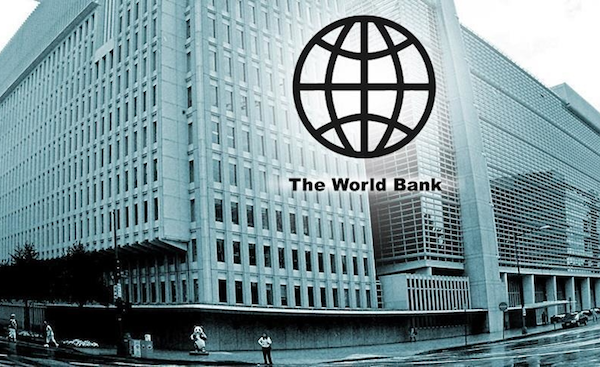


Despite critical commentary about his professional credentials and commitment to the multilateral system, David Malpass has been elected unopposed as the next president of the World Bank. Complaints about the outdated gentlemen’s agreement that led to this appointment will soon be overshadowed by Malpass’ initial signals on where he wants to lead this still globally important development institution.
During his campaign, Malpass said some of the right things but was silent on other priorities for the World Bank. To win the support of all his 189 members, Malpass must now unambiguously endorse the bank’s role in helping the world meet five challenges.
First, he must prioritize support for Africa’s development and integration into the world economy. The central development challenge for the next two decades is to help Africa deal with its demographic, environmental, and developmental challenges. The success or failure of this endeavor will determine the future of the 2.5 billion people who will inhabit the continent by 2050 — with major spillovers for every other region.
The World Bank is already the largest multilateral financier of Africa’s development, but it can play an even stronger role to facilitate a more coherent approach by Africa’s other large development partners — including the European Union and China.
Second, he must help middle-income countries make the right development choices. Emerging markets and middle-income countries will increasingly drive global growth. Their new infrastructure’s sustainability will define how livable our planet will be for the next century. Their economic success will provide expanded markets for global exports and jobs around the globe. And they are home to women, minorities, and other vulnerable groups who struggle with basic numeracy and literacy, lack human security, and live in fear of slipping back into absolute poverty. It would be a missed opportunity of historic proportions for the World Bank to watch these developments from the sidelines.
Third, he must target the people affected by fragility, conflict, and violence. Two billion people live in countries where their daily lives and development prospects are blighted by fragility, conflict, and violence. While the development community has an important role in addressing this challenge, it can only do so by working with the United Nations and other security, humanitarian, and diplomatic partners and by being willing to change some of its own operational practices and procedures. Jim Kim — Malpass’ immediate predecessor — helpfully pushed the bank further into these spaces and Malpass would do well to confirm the institution’s continued focus on this agenda.
Fourth, Malpass must look beyond borders. Whether it is preparing for the next pandemic, dealing with climate change, managing the ever-increasing flow of displaced people, establishing an international tax regime that limits avoidance through tax havens, or coping with the regulatory and ethical challenges posed by artificial intelligence and other technological advances, action will need to be coordinated across countries and regions.
The bank has progressively become a major player in a number of these areas, but it still does this as a grudging add-on to its main business, which continues to be organized around country-by-country lending. Malpass has the opportunity to focus on issues that go beyond borders and to make this a core part of the bank’s regular operations.
Finally, he must make sure that the bank is an active player in the debate on development best practice for the 21st century. Malpass takes over the bank at a time when much of what was taken as “good practice” in development cooperation is being questioned.
Many developing countries are looking to China not only for long-term funding but also as the model for shaping their own economic development strategy. No doubt, there is much to learn from China’s extraordinary journey over the past 50 years, and the World Bank, as a global organization, should provide the home for discussing which of those lessons can be usefully emulated by others. Similarly, the bank should reach out to work with regional banks and to the private sector which has both expertise and funding to bring to the development agenda.
ALSO READ: David Malpass named new World Bank Group President
Being World Bank president isn’t an easy job, especially at a time when the country that appointed you has signaled its intentions to pull away from multilateralism and articulated its view that the World Bank is an instrument in a broader stand-off with China.
To overcome this unfortunate context as well as his own history with the bank, Malpass must clearly demonstrate that he understands the bank as a zone of mutual interest, where — with the earned trust of its shareholders — he can advance a global agenda that will benefit all.
About the Author
Masood Ahmed
Masood Ahmed is president of the Center for Global Development and previously spent two decades driving economic development policy initiatives relating to debt, aid effectiveness, trade, and global economic prospects at the World Bank.