

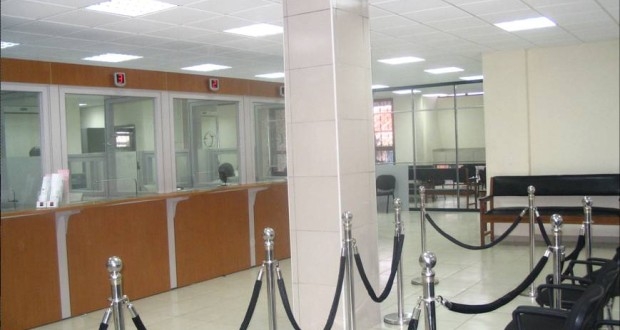

The Ghanaian banking sector is fairly well developed in an African context. The sector comprises 28 “Class 1” commercial banks. Of these, 12 are domestic-owned while the remaining 15 are foreign-owned. ARB Apex Bank functions as a “Central bank” for the Rural and Community Banks (RCBs), and is financed by the Rural Financing Services Project (RFSP) of the Ghanaian government.
Total commercial bank assets increased by 32.8% y-o-y to reach GHc36.2bn by end-2013. One year later, commercial banks assets had increased by 42.2% y-o-y to Ghc51.4bn, partly driven by a 41.6% y-o-y increase in gross advances. Meanwhile, on the liabilities side, total deposits reached Ghc32.4bn by December 2014, 39% y-o-y higher. Nonetheless, the increase in borrowing continued to outpace deposit growth, with the former 69.2% y-o-y higher. This meant the share of deposits in total liabilities declined from 71.9% in December 2012 to 63% two years later. Put differently, banks have become increasingly indebted over the past two years, through loans rather than deposits. The banking industry’s capital adequacy ratio (CAR) stood at 18.5% in December 2013, but has since declined to 17.9% by December 2014. That said, the average CAR remained well above the regulatory requirement of 10%. Stress tests conducted by the Bank of Ghana (BoG) at the end of 2013 indicated that buffer were still adequate in the case of most banks and on aggregate. The exercise found that about two thirds of banks would still meet the regulatory CAR requirement when subjected to various stress tests while only one bank would have negative capital under certain scenarios.
Turning to asset quality, the NPL ratio declined from 13.2% in December 2012 to 12% in December 2013. According to the BoG, the NPL ratio declined further to 11.3% in December 2014, with the private sector accounting for the lion’s share of NPLs, or 97.7% to be more precise. The BoG notes that “even though indigenous enterprises received only 58.4% of the private sector credit, they accounted for 81.4% of NPLs in the sector as at December 2014.” Furthermore, the commerce and finance industry still accounts for the largest amount of NPLs, followed by services and manufacturing. Together, these three industries accounted for 66.7% of NPLs in December 2014, down from 66.9% a year earlier.
In it 2014 Article IV Consultation report, the IMF noted that, though the Ghanaian banking sector remains well capitalized and liquid, there are some emerging risks that need to be monitored carefully. Firstly, macroeconomic imbalances and slowing economic growth may lead to deterioration in banks’ asset equality. Furthermore, the recent sharp drop in international oil prices could potential push NPLs higher, should the associated impact on oil industry profits result in significant amounts of government securities, thereby exposing them to interest rate and sovereign risks. Back in May 2014, the INF raised concern about the sharp increase in short-term foreign borrowing. That said, the fund highlighted that the risk was mitigated by the fact that the loans originated mainly from parent banks. Based on the latest data retrieved from the Bog, it would seem that banks’ preference has shifted towards longer-term foreign borrowing. short-term foreign borrowing increased by 14.6% y-o-y in December 2014, while the corresponding figure for long-term foreign borrowing reached 175.9% y-o-y; although, the latter was from very low base.
Source: KPMG 2015 Sub-Saharan African Banking Report